If you drive a four-wheel-drive car, where it goes on the dyno matters. A lot of rolling roads only drive two wheels, which is fine for a front- or rear-wheel-drive car but means an all-wheel-drive car has to be run in a way it never drives on the road. Here’s what changes between a 2WD and a 4WD dyno, which cars need which, and why dyno figures don’t always match.
What a rolling road measures
The car’s driven wheels sit on rollers, and the dyno measures the power and torque reaching them as the car accelerates or holds a set load. That’s power at the wheels. Some dynos then add an estimate for drivetrain losses to quote a “flywheel” figure, but that part is a calculation, not a measurement. On our dyno, the figures on your graph are measured at the wheels.
What happens to an AWD car on a 2WD dyno
On a two-wheel-drive dyno, only one axle is on the rollers. To run an all-wheel-drive car, drive to the other axle has to be disconnected or the system tricked into thinking it isn’t needed. That can mean removing a propshaft, pulling a fuse or using a special mode, depending on the car.
- The car is no longer running as it does on the road, so the figures and the way it delivers power can differ.
- Traction, stability and AWD control systems can object to one axle standing still, logging faults or limiting torque.
- Some drivetrains simply don’t like being run that way, so it needs care.
For a quick power check that can be acceptable. For mapping, where you want the car to behave exactly as it will on the road, it’s a compromise.
What a 4WD dyno does differently
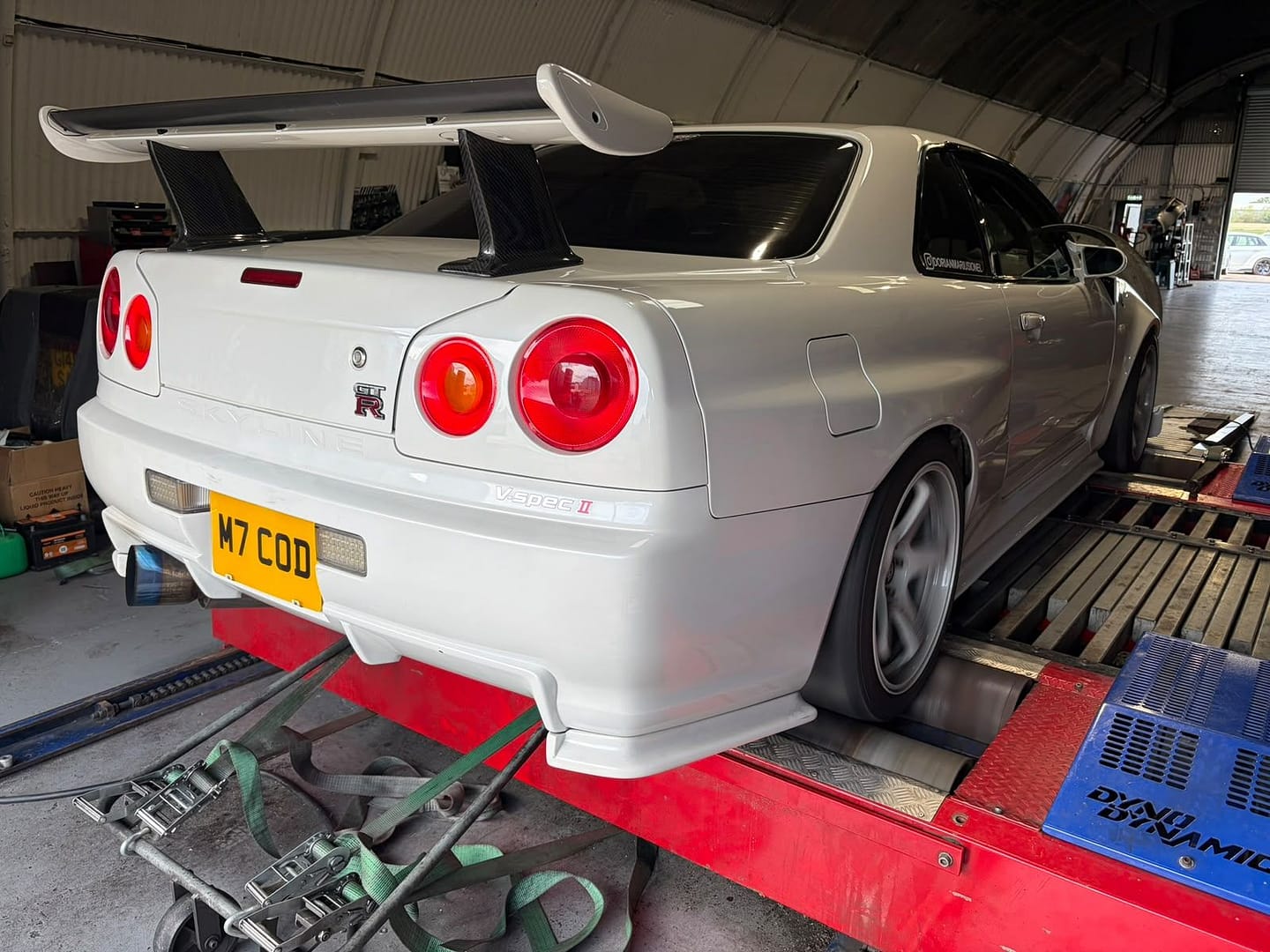
On a 4WD dyno, both axles sit on rollers and all four wheels are driven, so an all-wheel-drive car runs with its drivetrain working as normal. That matters most when we’re tuning: torque split, traction control and the AWD system all behave as they will on the road.
Our Dyno Dynamics DS450, upgraded in 2026, also holds the car at a steady load, so part-throttle and boost areas can be mapped accurately rather than just full-throttle pulls, and we datalog every session. It’s just as happy with front- and rear-wheel-drive cars.
Which cars need a 4WD dyno?
Any car that drives all four wheels, including:
- VW Golf R and other 4MOTION models
- Audi S and RS models with quattro
- BMW xDrive models
- Mercedes-AMG 4MATIC models
- Nissan GT-R
- Mitsubishi Lancer Evolution and Subaru Impreza/WRX
- Ford Focus RS and Toyota GR Yaris
Why dyno figures differ
Two dynos can give the same car different numbers. Make and calibration, correction factors, air temperature, tyre pressures and how the car is strapped down all play a part. Dyno Dynamics dynos are used by tuners worldwide because they’re consistent and repeatable, but the honest way to judge a change is to compare before and after on the same dyno, on the same day where possible. That’s why every remap we do includes a baseline run and a before-and-after graph.
Getting the most from a dyno session
- Tell us the car and any modifications when you book, so we can set the dyno up for it.
- Make sure the tyres are in good condition, with no damage.
- Bring the car with a sensible amount of the fuel you normally use.
- Mention any warning lights or known problems: we can often reproduce faults under load and log them.
A power run is £70, and remaps on the dyno start from £360. Dyno rental for tuners and builds is priced on request. See our 4WD rolling road for more.
Near Bedford, St Neots and Huntingdon
We’re at Little Staughton, north of Bedford: about 15 minutes from St Neots, around 25 minutes from Huntingdon and Bedford, and under an hour from Milton Keynes and Luton. If you’ve been looking for a 4WD rolling road in Bedfordshire or Cambridgeshire, this is it.
Frequently asked questions
Is a 4WD dyno more accurate than a 2WD dyno?
For an all-wheel-drive car, yes, because the car runs as it does on the road. For a front- or rear-wheel-drive car, either type works.
Can front-wheel-drive and rear-wheel-drive cars go on a 4WD dyno?
Yes. Our Dyno Dynamics DS450 runs front-, rear- and all-wheel-drive cars.
Is the power figure at the wheels or at the flywheel?
We measure power and torque at the wheels. Flywheel figures are an estimate that adds back drivetrain losses.
Why does my car make less on your dyno than on another one?
Different dynos, correction factors and conditions give different numbers. Compare before and after on the same dyno to judge a change.
How much is a power run?
A power run is £70 including VAT, with a power graph to take away.
Book dyno time
Tell us your car and what you need, from a quick power run to a full custom tune. Call or WhatsApp 07460 752897, Monday to Friday 10am to 6pm and Saturday 10am to 4pm.